Tips & Advice
Your Essential Guide to Building a Business Wardrobe

Getting dressed for work is far easier when you have a dependable set of clothes you know work well together. A strong business wardrobe doesn't need to be vast, but it should be built on versatile pieces that combine in plenty of different ways.
What that wardrobe looks like will depend on your workplace and your personal style. In this guide, we set out the key pieces for a range of business wardrobes, from formal offices to more relaxed dress codes. Treat it as a starting point rather than a rulebook: if your own style leans in a different direction, trust it.
The short answer: a formal office wardrobe needs two or three suits, five or six shirts, an extra pair of trousers, and good leather shoes. Business casual and creative workplaces need fewer suits and more separates: sport jackets, trousers, relaxed shirts and knitwear.
How Do You Build a Versatile Business Wardrobe?
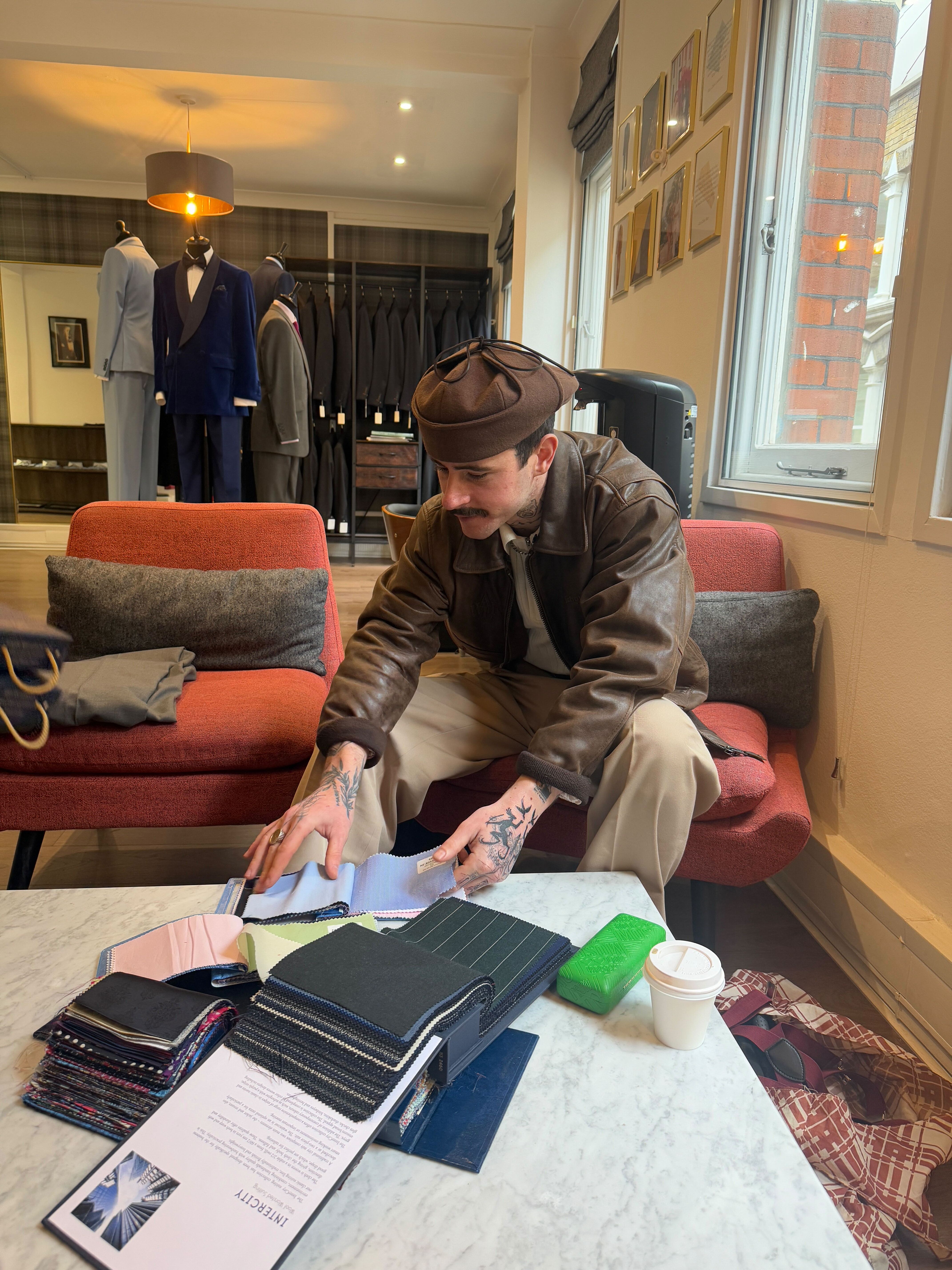
What should you buy first for a work wardrobe?
Start with a few classic staples and build outwards:
1. A well-fitting suit in navy or mid-grey that also works as separates. If you can, add a spare pair of matching trousers, as trousers usually wear out before the jacket.
2. A handful of shirts in white and pale blue/pink, formal or relaxed depending on your office.
3.For your next piece of tailoring... In a formal office, a second suit in a contrasting shade (charcoal if your first is navy). In business casual or creative workplaces, a sport jacket and trousers that also work with your suit jacket.
4.You can introduce colour, pattern and seasonal cloths, once the foundation is in place.
How do you make a small wardrobe go further?
Wear your suit as separates. One suit that separates well, plus a sport jacket and an extra pair of trousers, gives you four jacket-and-trouser combinations before you've changed a shirt.
Think in outfits. Before buying anything, picture two or three outfits it would make with what you already own. If you can't, it's not the right piece yet.
Choose a mid-weight cloth first. Around 10–12oz is comfortable for most of the year in an office. Lighter and heavier cloths can come later.
What Do You Need in a Formal Office Wardrobe?
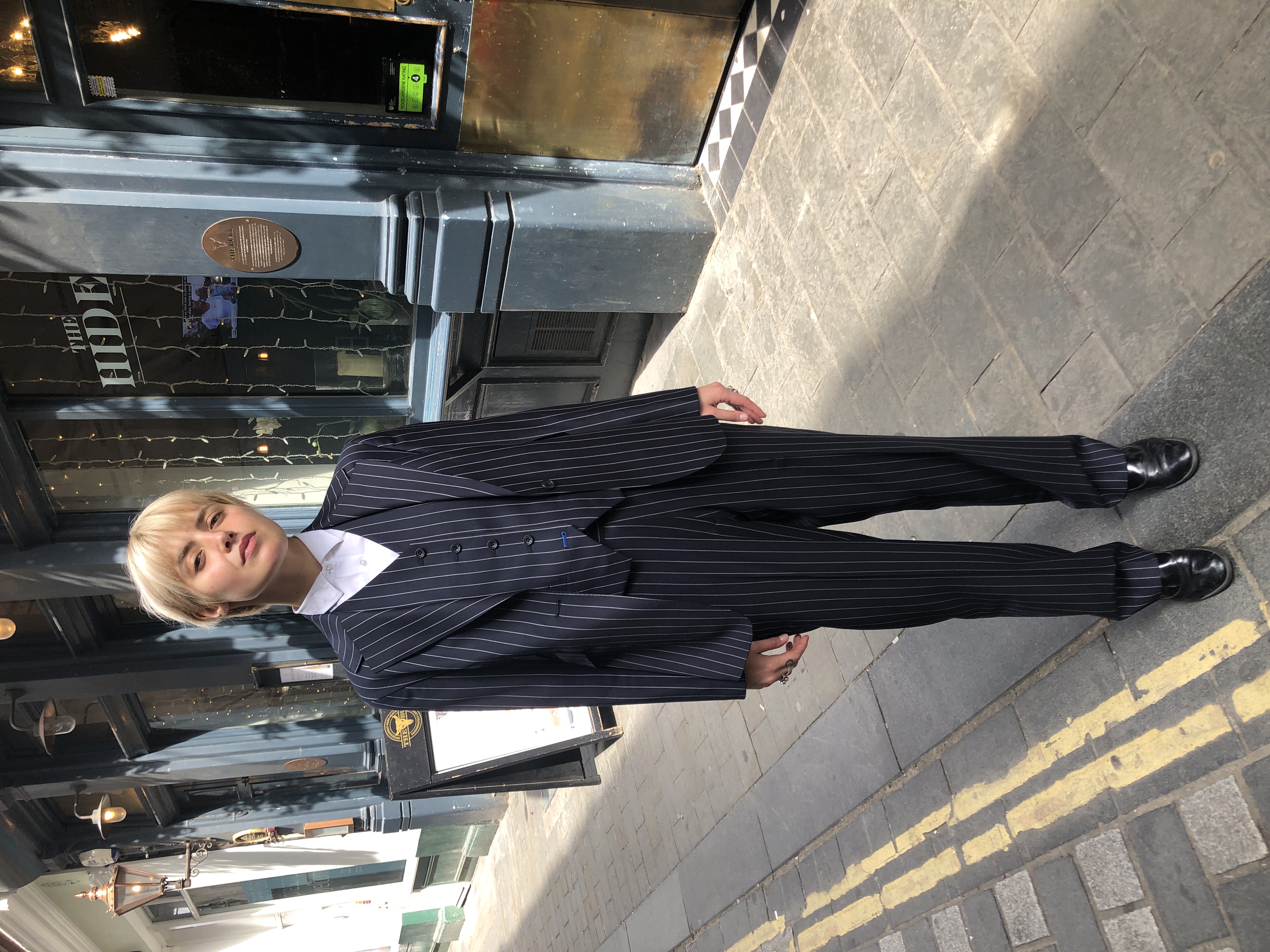
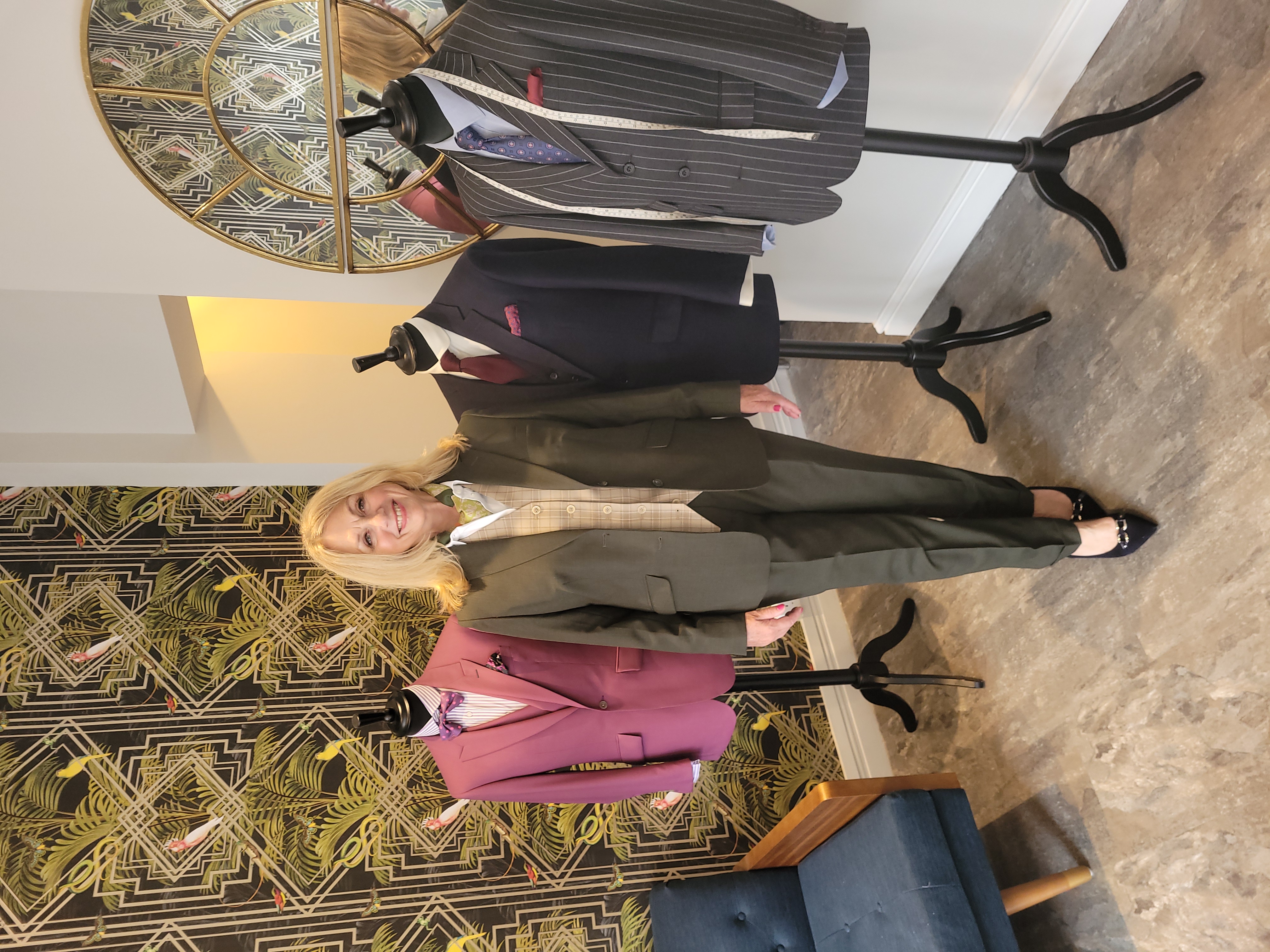
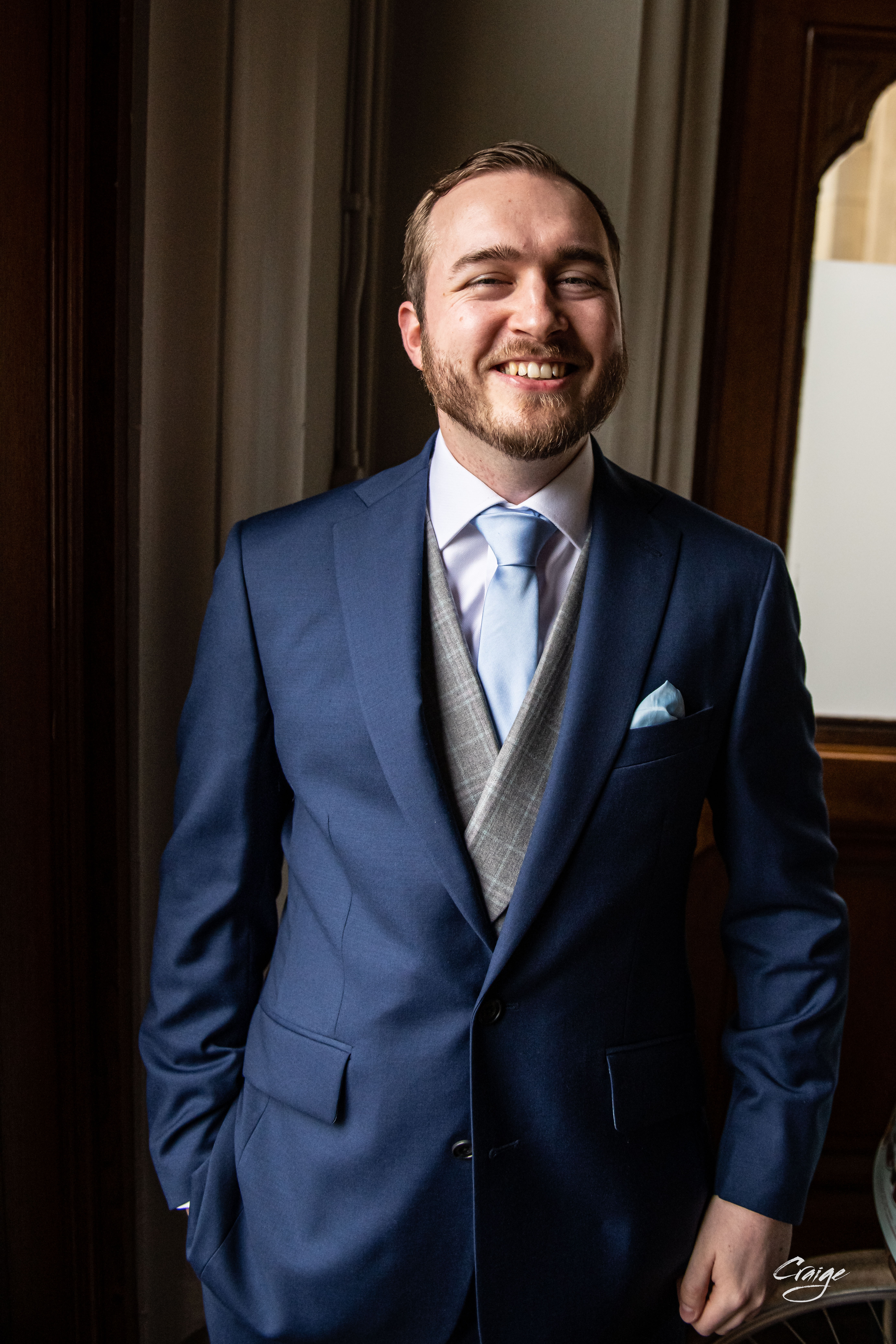
How many suits do you need for work?
Two or three, in navy, mid-grey and charcoal. They're easy to combine with different shirts and ties, and owning more than one lets each suit rest between wears, so it lasts longer. A three-piece is worth adding if you have regular formal meetings or events, and a black or midnight blue dinner suit if your work includes black tie.
How many shirts do you need for work?
Five or six, so you have a fresh one every day of the week. White and pale blue/pink work with almost any suit.
Finishing touches: an extra pair of trousers, black or dark brown leather shoes, a navy, charcoal or camel overcoat, and a few ties, cufflinks and pocket squares.
Cloth to consider: Dormeuil Millennial or City of London.
What Should a Business Casual Wardrobe Include?
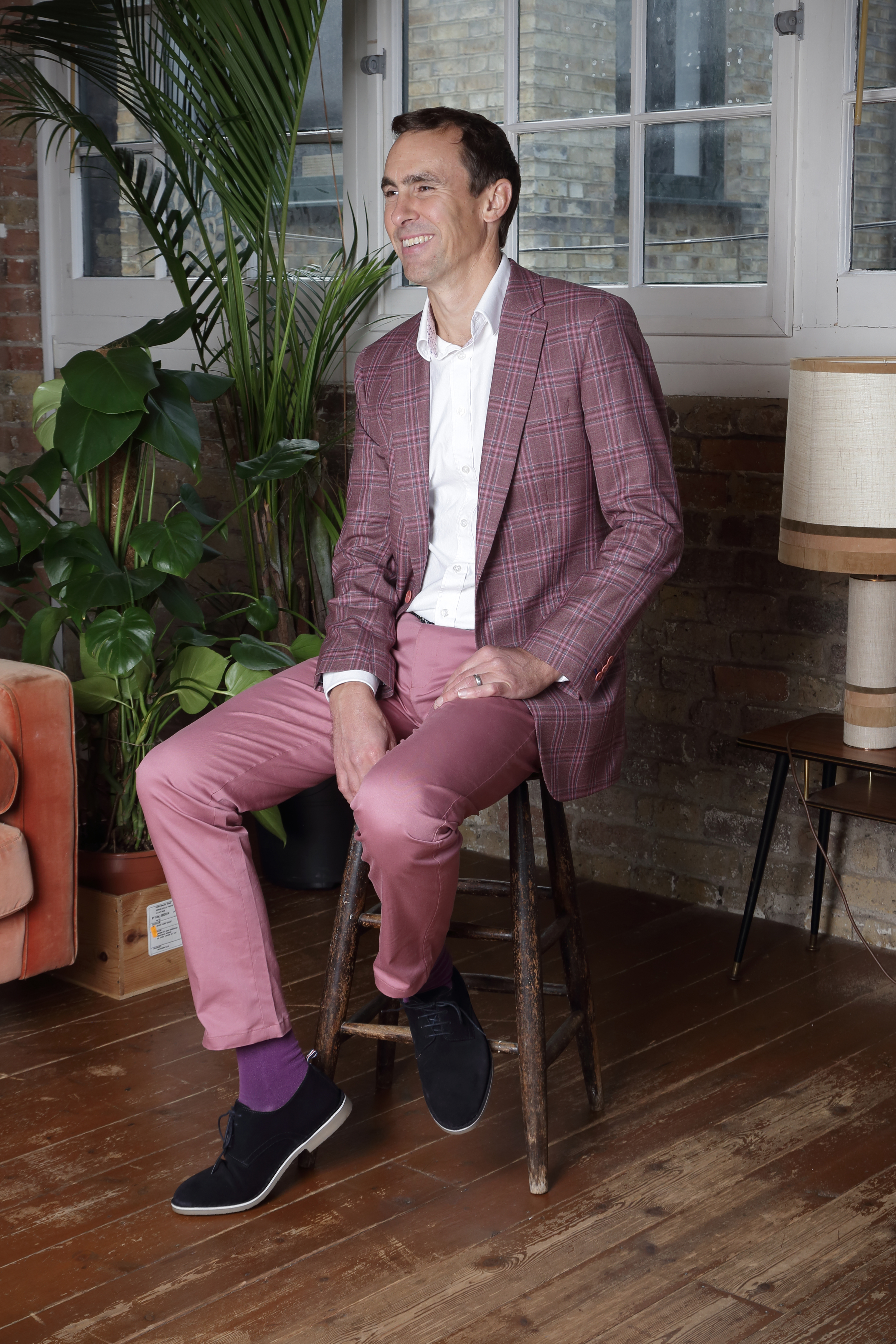
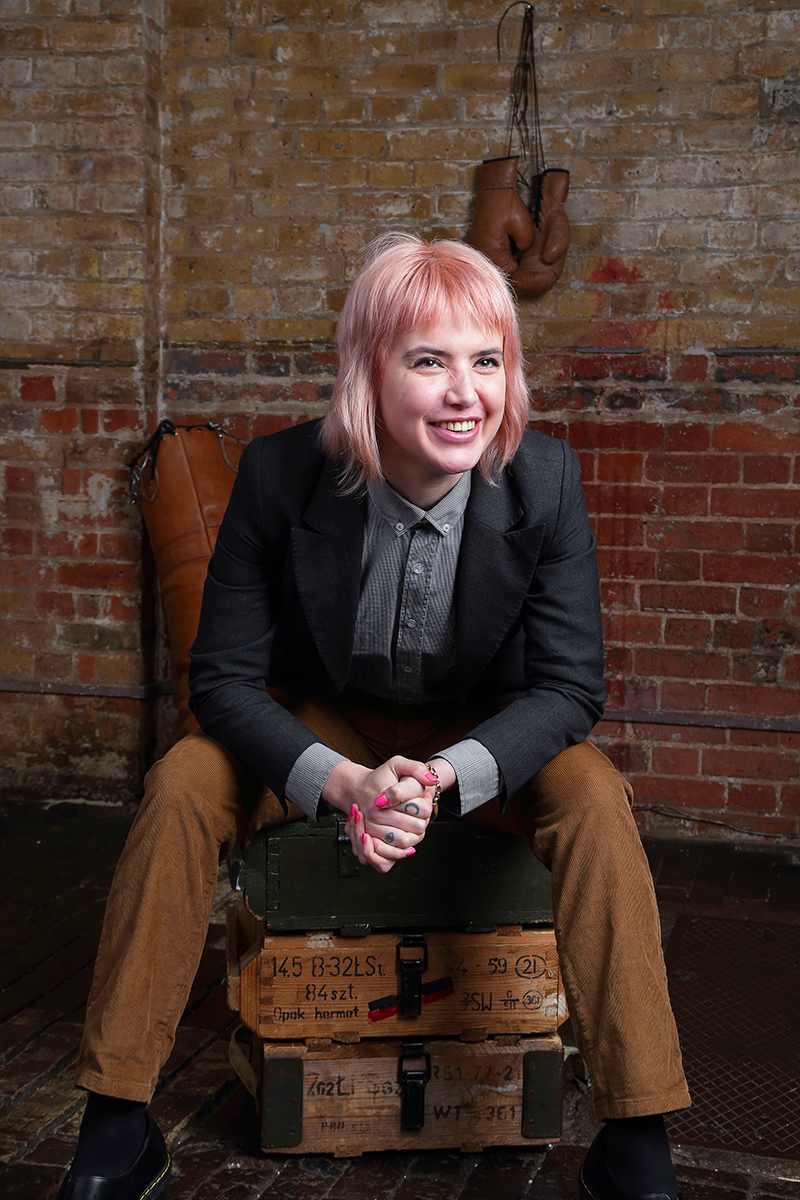
Do you need a suit for business casual?
One or two is enough, in navy, charcoal or mid-grey cloth that work as separates. Most of the work is done by one or two sport jackets, which pair with almost any trousers, plus tailored trousers in navy, beige or brown and a pair of chinos.
What shirts and knitwear work for business casual?
Relaxed shirts in white and pale blue, plus fine-gauge knitwear and polos. A knit over a shirt with a sport jacket is one of the easiest combinations.
Finishing touches: loafers, brogues or smart boots, and ties and pocket squares with subtle colour and pattern.
Cloths to consider: Dormeuil Mohair or 4 Seasons by Holland & Sherry.
How Do You Build a Wardrobe For a Creative or Relaxed Office?
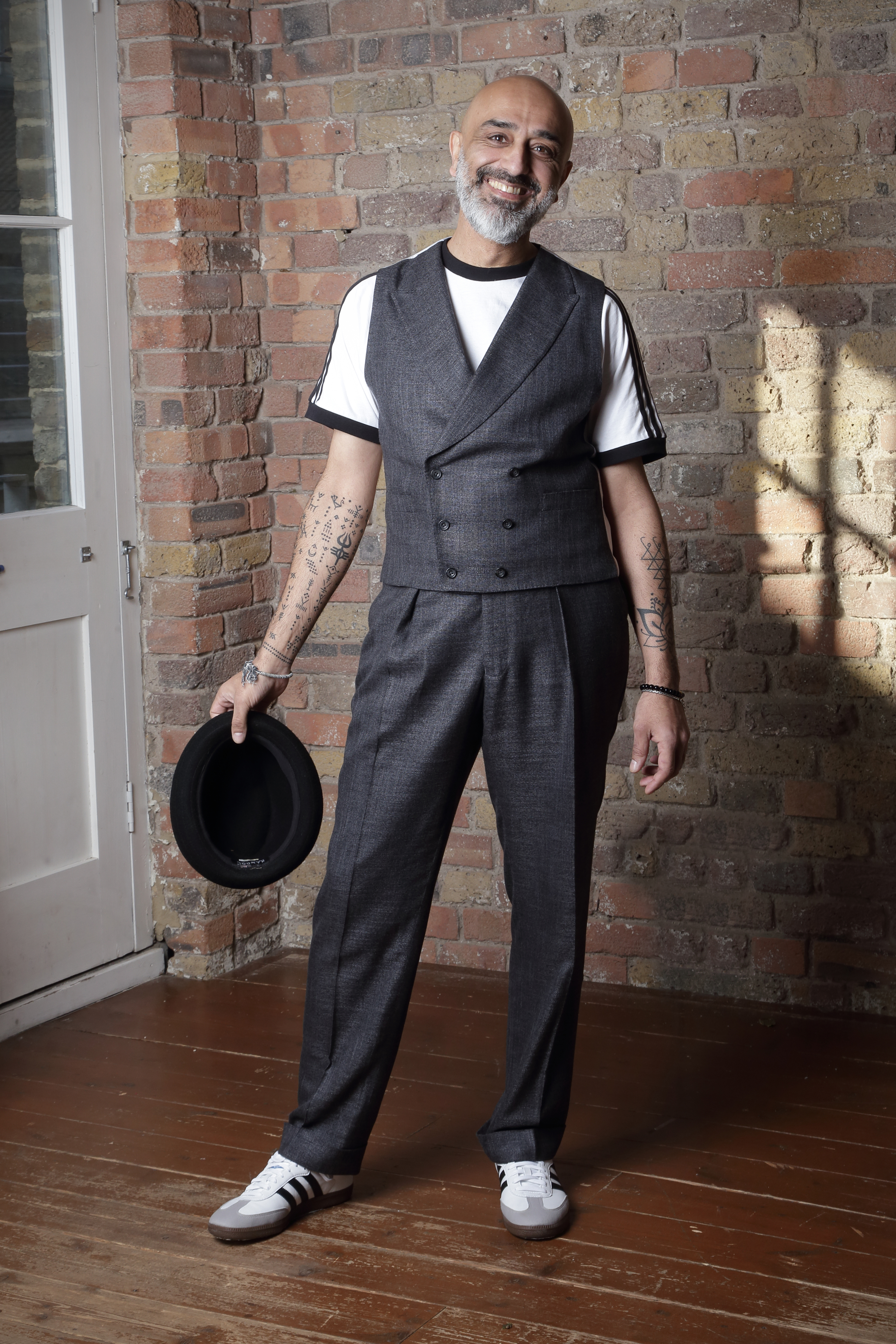
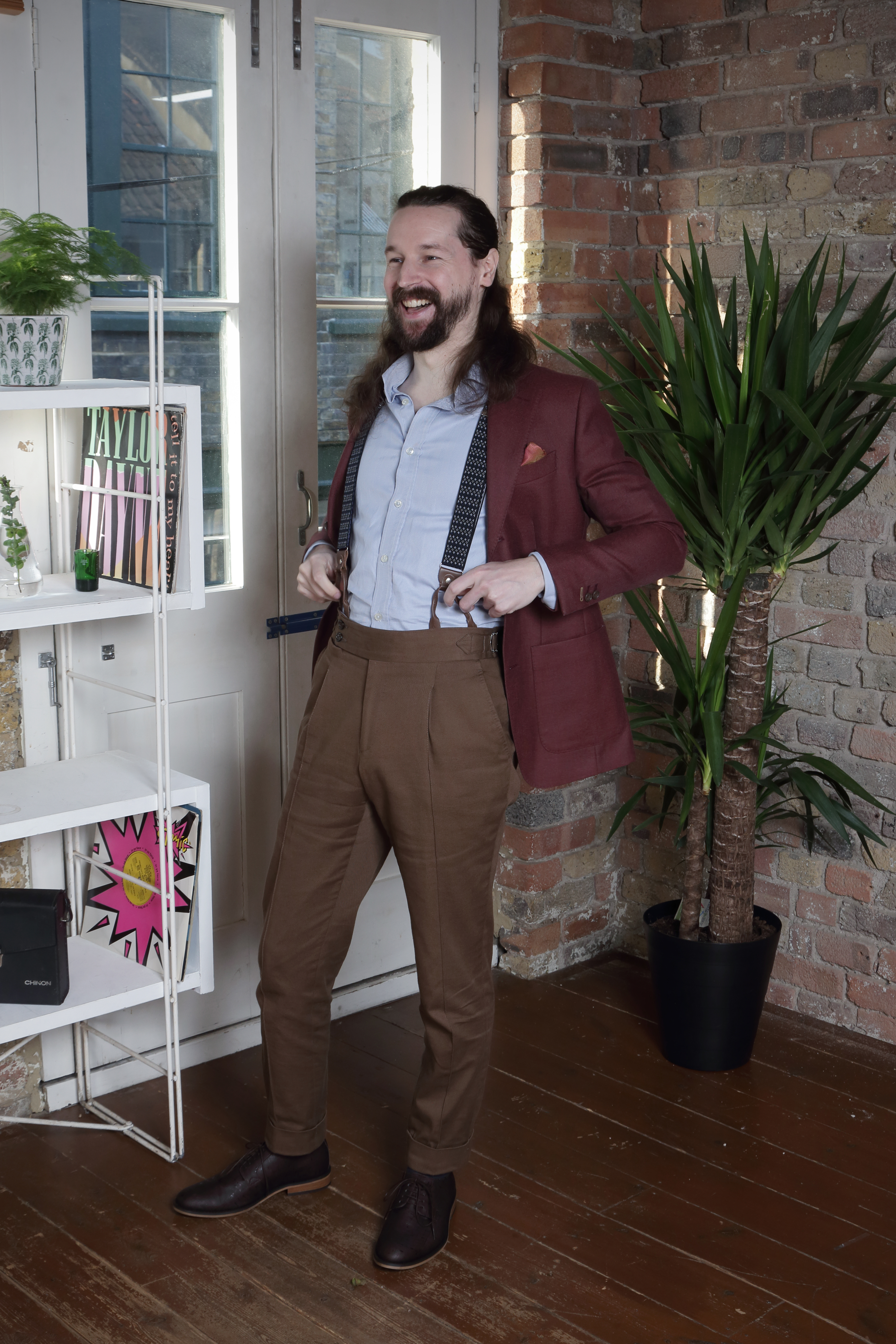
Do you still need a suit in a relaxed office?
Yes, one, for important meetings. Navy works hardest if it's your only suit, but a richer shade works if that's your style. Build the rest of your tailoring around two or three sport jackets in subtle checks and textured weaves.
How much colour and pattern can you wear in a creative office?
Plenty, and trousers and shirts are the easiest place to start. Mix three or four pairs of tailored trousers in beige or brown with richer colours such as burgundy or forest green, and add four or five relaxed shirts in subtle pastels, checks and stripes alongside your white,pale pink and blue basics.
Finishing touches: loafers, suede shoes, smart boots or clean leather trainers (keep one smarter pair too), and patterned socks or a statement tie.
Cloths to consider: Dormeuil Naturals or Holland & Sherry Corduroy and Tweed.
Business Wardrobe at a Glance...
Formal Office
Suits: 2–3, plus a dinner suit if needed
Sport jackets: Optional
Trousers: 1 extra pair
Shirts and tops: 5–6 formal shirts
Shoes: Black or dark brown leather shoes
Business Casual
Suits: 1–2 that can also be worn as separates
Sport jackets: 1–2
Trousers: A few pairs, including chinos
Shirts and tops: Relaxed shirts, fine knitwear and polos
Shoes: Loafers, brogues and smart boots
Creative or Relaxed Office
Suits: 1 versatile suit
Sport jackets: 2–3
Trousers: 3–4 pairs, including chinos
Shirts and tops: 4–5 relaxed shirts
Shoes: Loafers, suede shoes, boots and clean trainers
How Can King & Allen Help Build Your Business Wardrobe?
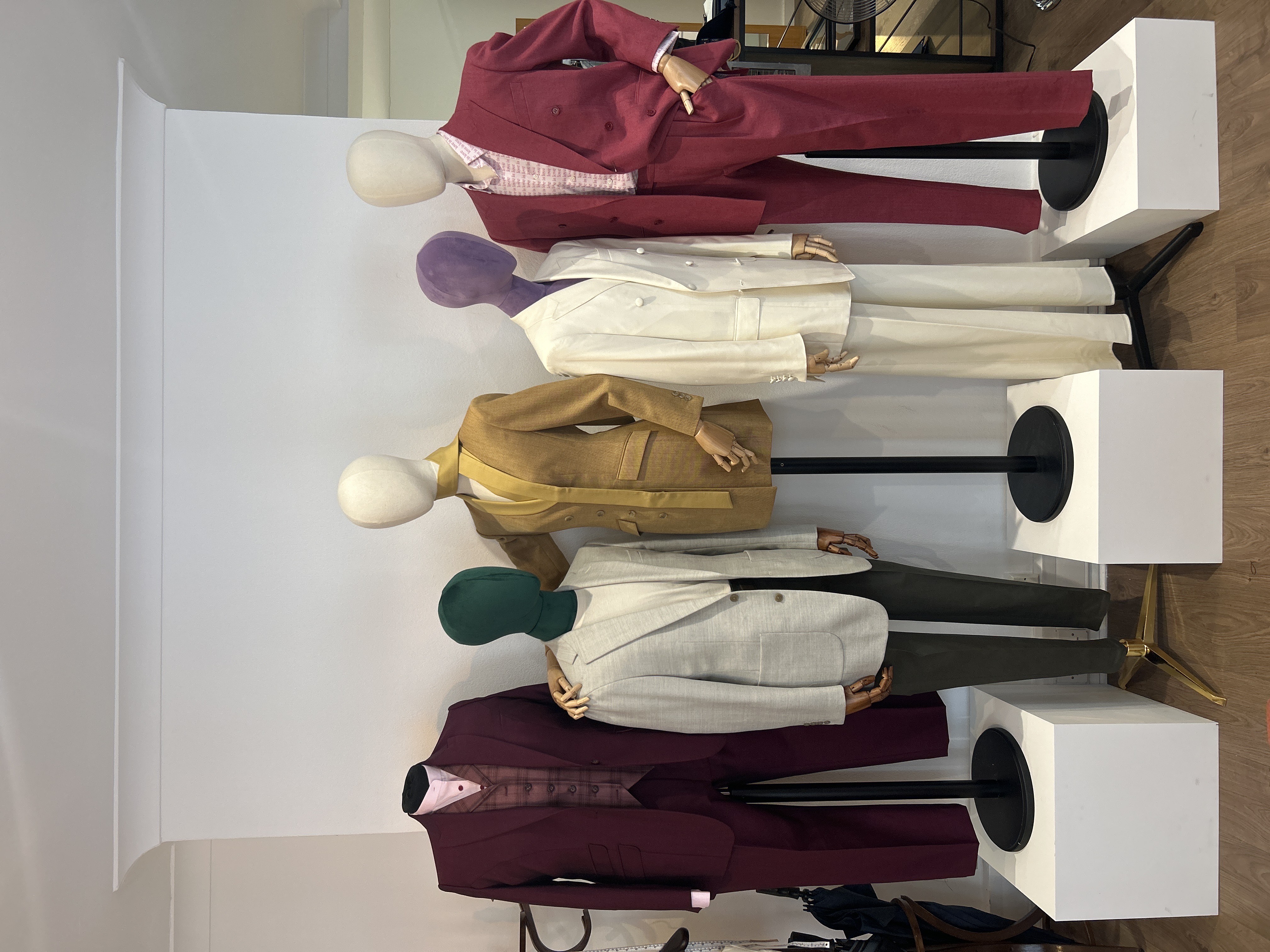
There's no single formula for the perfect business wardrobe. Before buying or commissioning anything, ask yourself: "Where will I actually wear this?" Our tailors can help you answer that, looking at what you already own and planning pieces that work together and build over time.
Ready to build a business wardrobe that works for you?
Book a consultation and start creating your look
You might like...
-
 The King & Allen guide to dressing for a job interviewTips & Advice
The King & Allen guide to dressing for a job interview