Article
Can AI Replace a Bespoke Tailor?

Artificial intelligence has quickly become part of everyday life. We use it to search for information, answer questions, organise our schedules and generate ideas. As technology develops, it is beginning to influence almost every industry, including tailoring.
Bespoke tailoring is built on hands-on work, years of experience and personal service, whilst AI works with patterns and data. So where does AI fit in? And for a business like ours, which is helping shape the future of inclusive tailoring, the bigger question is: how can AI learn from knowledge that hasn't been written yet?
How Is AI Already Being Used in Fashion and Tailoring?
AI is already being explored across fashion and clothing, with businesses looking at ways technology can make certain processes more convenient and accessible. Some examples include…
Personalised style recommendations
AI can analyse a customer's preferences and previous choices to suggest colours, fabrics and styles that suit them. Rather than browsing through endless options, customers can describe what they're looking for to an AI-powered assistant and receive tailored suggestions.
AI-powered body scanning and measurements
Digital scanning technology can collect measurements and create a digital representation of an individual's body. This could make personalised clothing more accessible, particularly for people who cannot easily visit a physical store.
Automated pattern drafting
AI can assist with creating clothing patterns by using measurements and additional details to generate a starting point for skilled professionals.
Image generation
AI can create images of clothing and outfits, allowing people to visualise different ideas before anything is made.
The potential benefits are clear, with AI’s capability to process large amounts of information quickly and automate repetitive tasks. However, bespoke tailoring involves decisions that cannot always be made from basic information alone.
Understanding the Person Behind the Suit
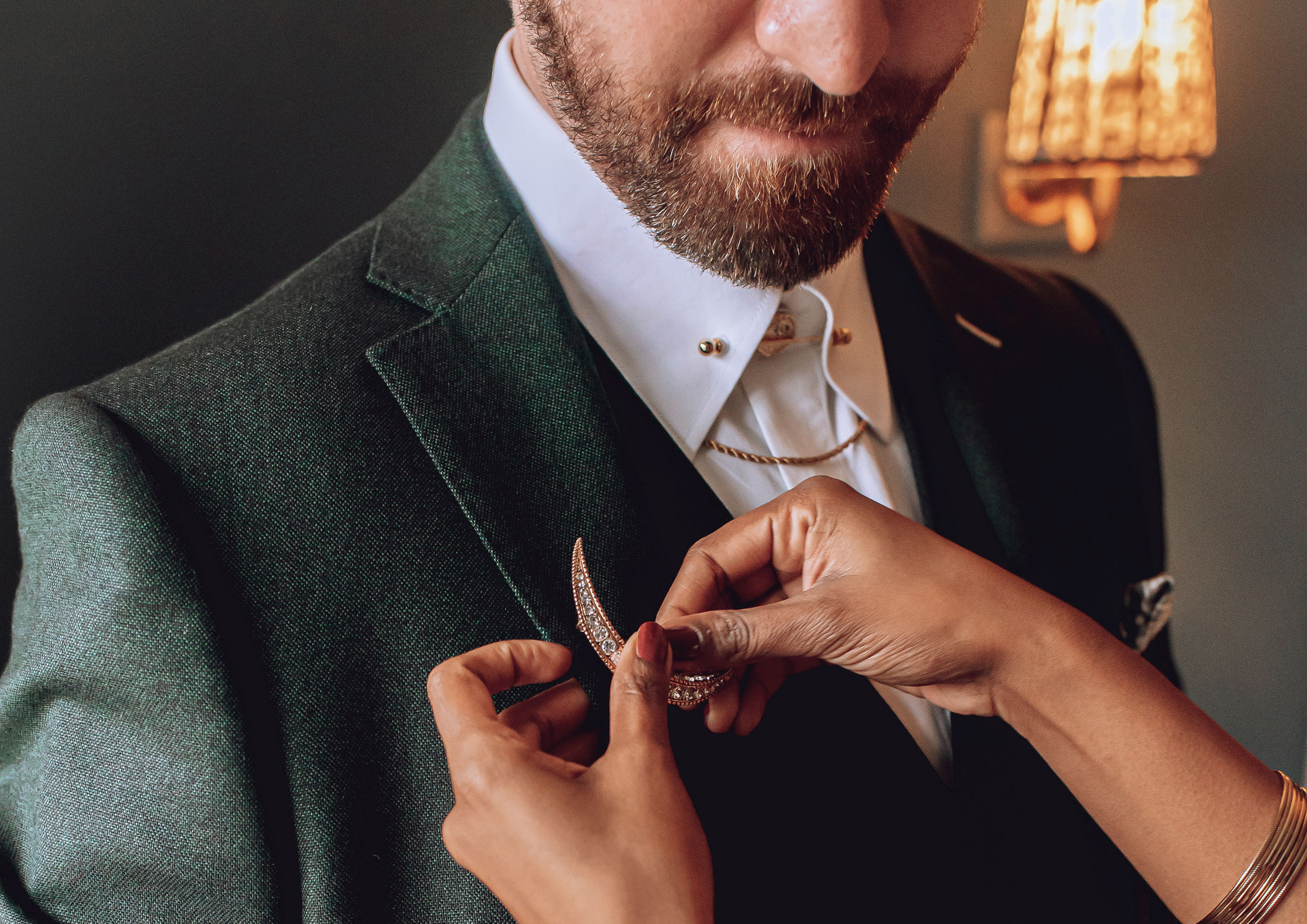
In a bespoke consultation, the tailor needs to understand what the client is looking for and how the garment will fit into their life. A suit for regular business meetings will need different considerations from one designed for a formal occasion, and an individual's personal style influences everything from the cloth choice to the buttonholes.
These conversations can also change direction. A client may arrive with a very clear idea but discover something they prefer during the appointment, or they may have seen a style online and prefer another option once they see it in person. An experienced tailor responds to these changes and guides the conversation as it develops.
AI can make suggestions based on the information it is given, but a bespoke consultation develops through a personal conversation, shaped by the client and the tailor in the room together.
Feeling the Difference
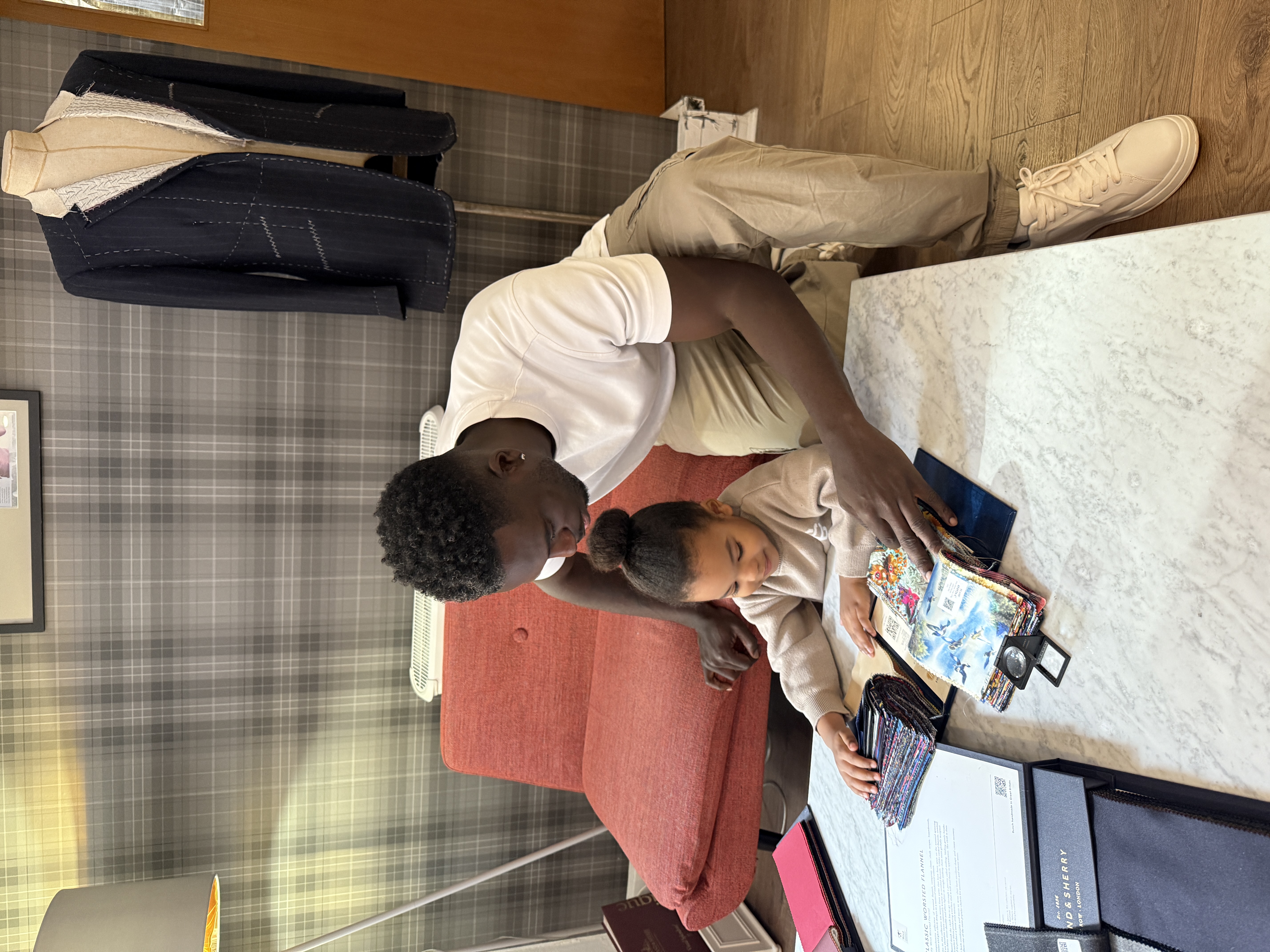
Fabric is the heart of tailoring, and choosing it is a hands-on process. In the showroom, clients can run their fingers across a cloth, feel its weight as it drapes over their arm and notice how it catches the light as they turn it. A fabric can look completely different in your hands than it does in a photo. The softness of a flannel, the crispness of a high-twist wool or the subtle sheen of a mohair blend only really comes to life in person.
The same goes for every detail of the garment. A client might try on a sample jacket and feel how a particular cut sits on the shoulders, handle the lining options, or compare buttons in the palm of their hand. Each of these tactile moments helps ideas take shape, so the finished garment begins to feel real long before it's made.
A Shared Experience
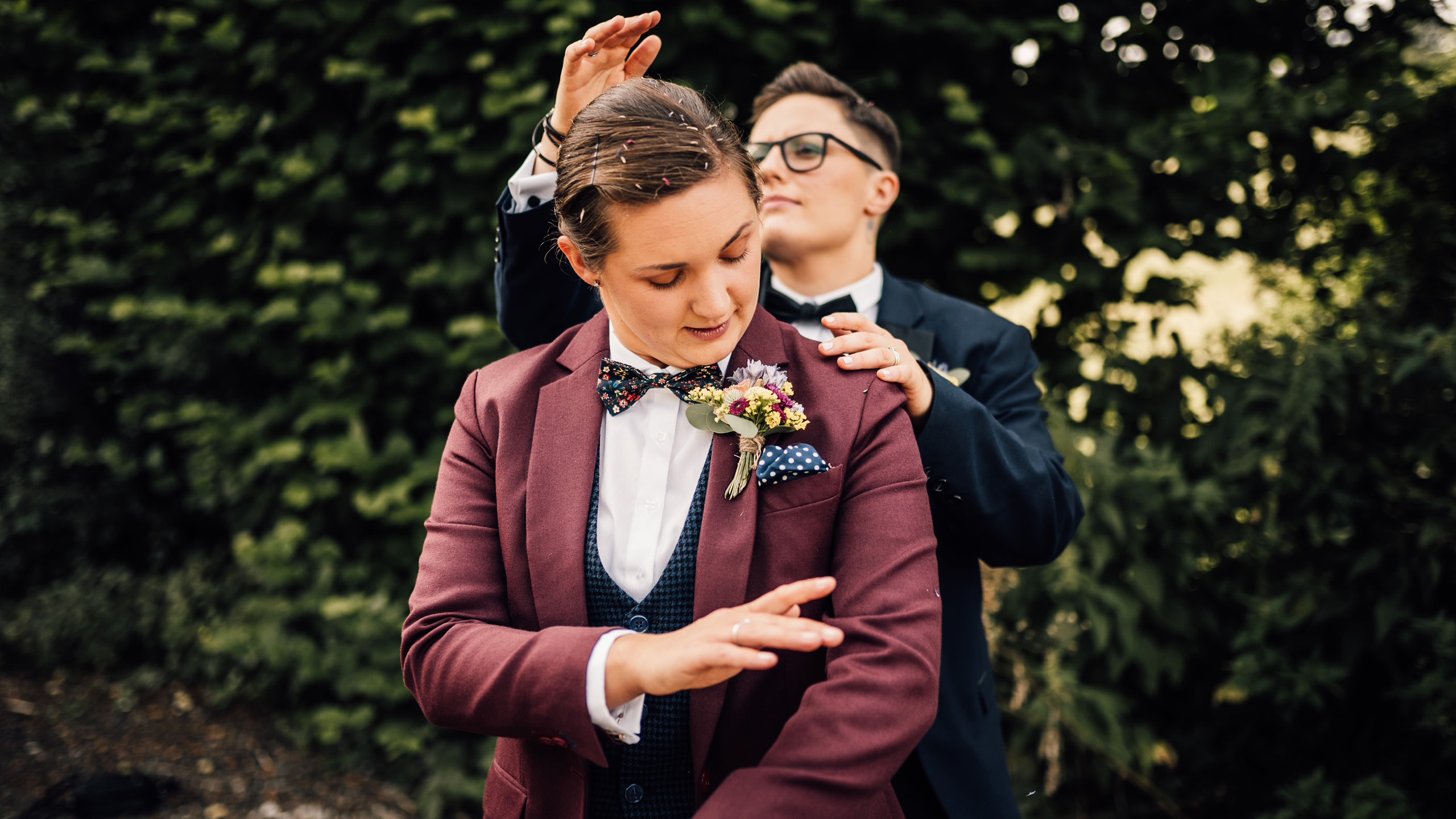
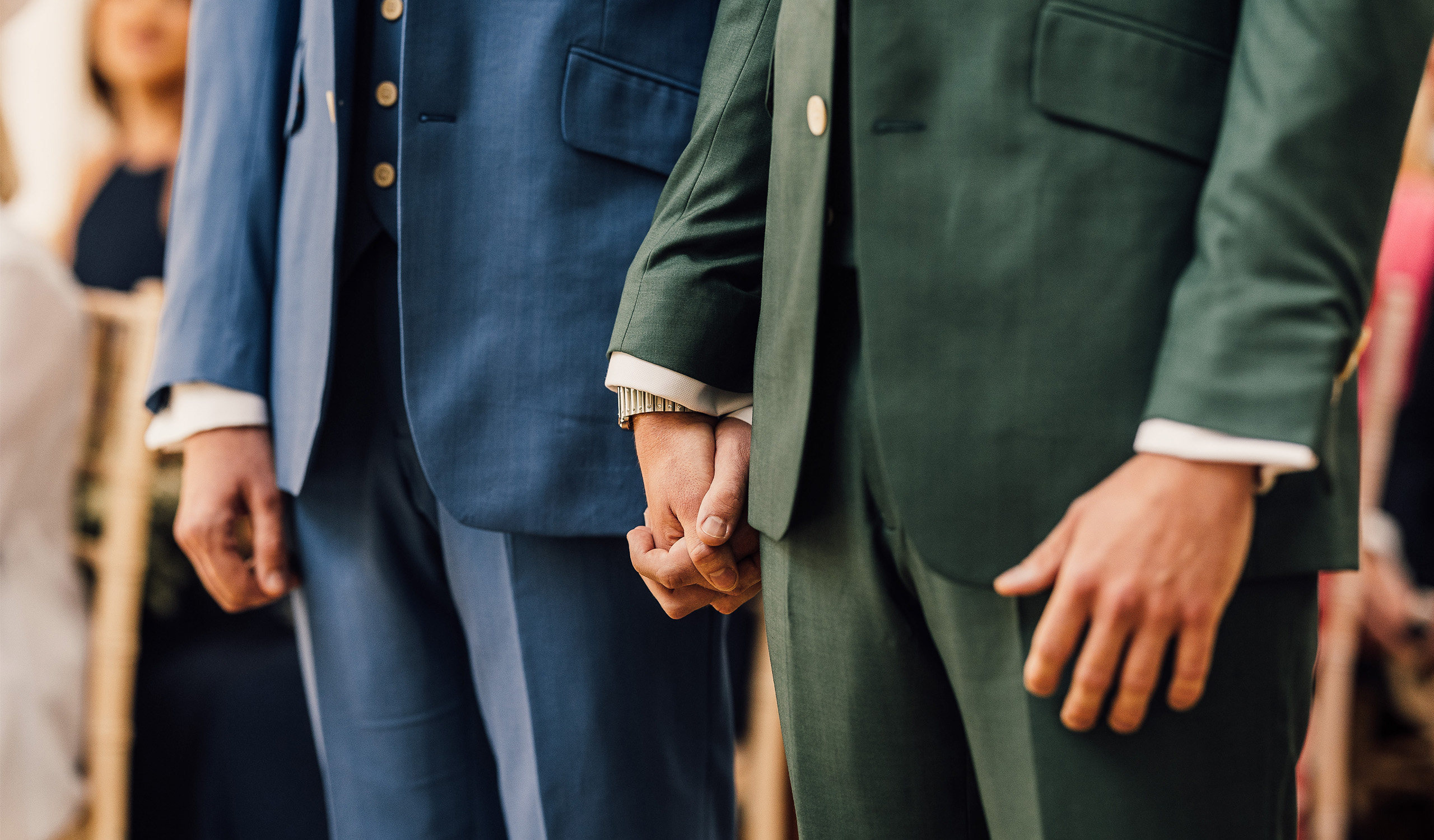
A bespoke appointment is more than a transaction. It's often part of one of life's big moments: a groom preparing for his wedding, a graduate buying their first proper suit, a father and son getting fitted together for a family celebration. These occasions deserve to be marked, and being in the showroom together turns them into an event of their own.
There's something special about watching someone you love try on a jacket and stand a little taller, or sharing a laugh with your best man over the boldest lining in the room. The tailor shares in that excitement too, and many clients remember the person who helped them as fondly as the suit itself. AI can personalise a recommendation, but it can't raise a glass with you or feel proud when you see yourself in the mirror for the first time. That warmth only comes from people being in the room together.
Developing a Tailor's Eye
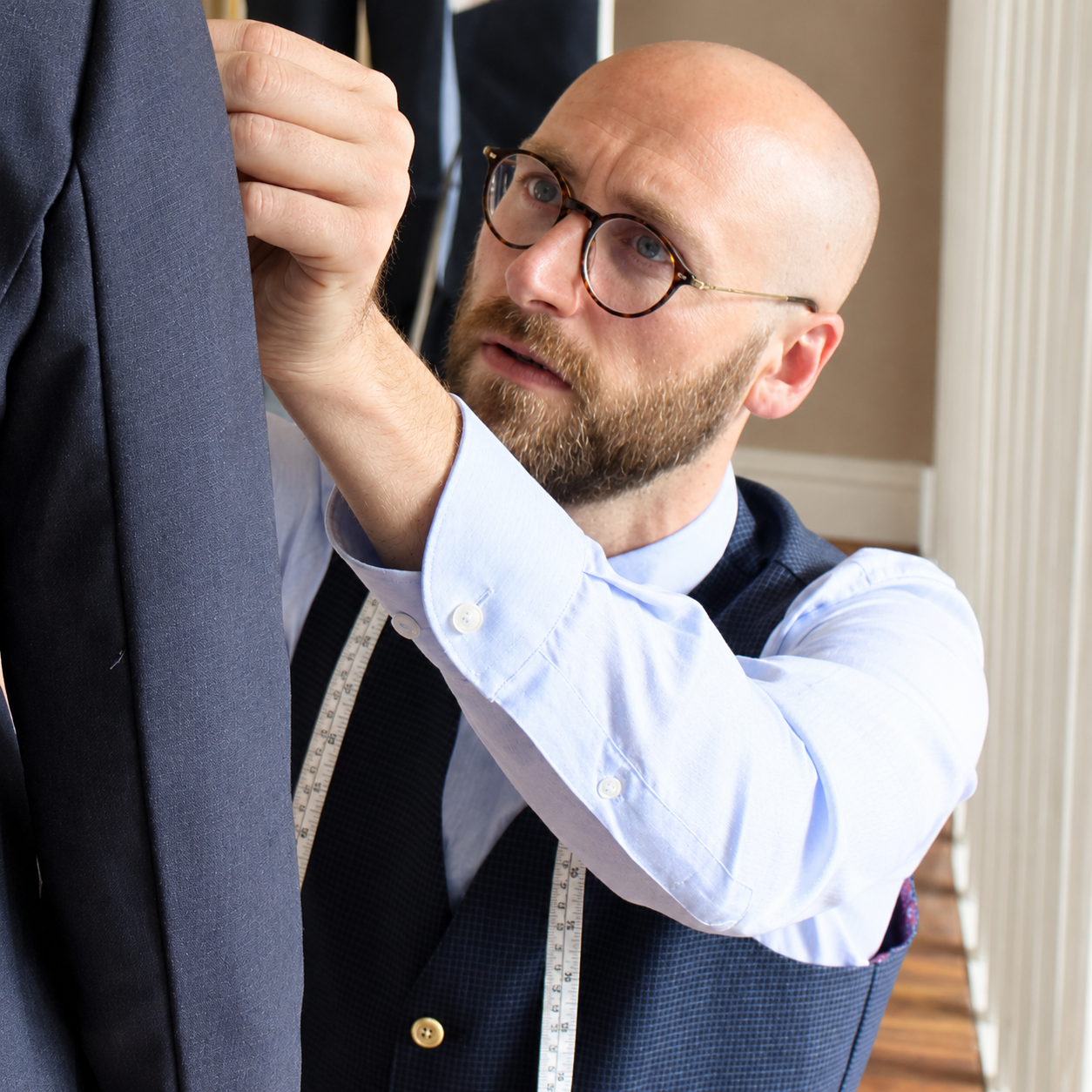
Tailoring relies heavily on observation, and consultants learn to notice subtle reactions that help steer the conversation in the right direction. Two clients might share almost identical measurements, yet one naturally carries a dropped shoulder, while the other keeps tugging at the front of a sample jacket as though it doesn't quite feel right. Neither might mention it, and neither would show up in a set of numbers, but a tailor will spot it straight away and take it into account.
Some details are also difficult to put into words, but an experienced tailor can pick up on them easily. A client may feel unsure about a particular detail without being able to explain why, and a tailor can recognise that hesitation and adjust the conversation to get to the heart of it.
This is where experience becomes particularly valuable, because a tailor is constantly observing and making decisions based on what is happening in front of them. AI can identify patterns within information, but tailoring involves situations where there may be no single right answer.
Fittings and Adjustments
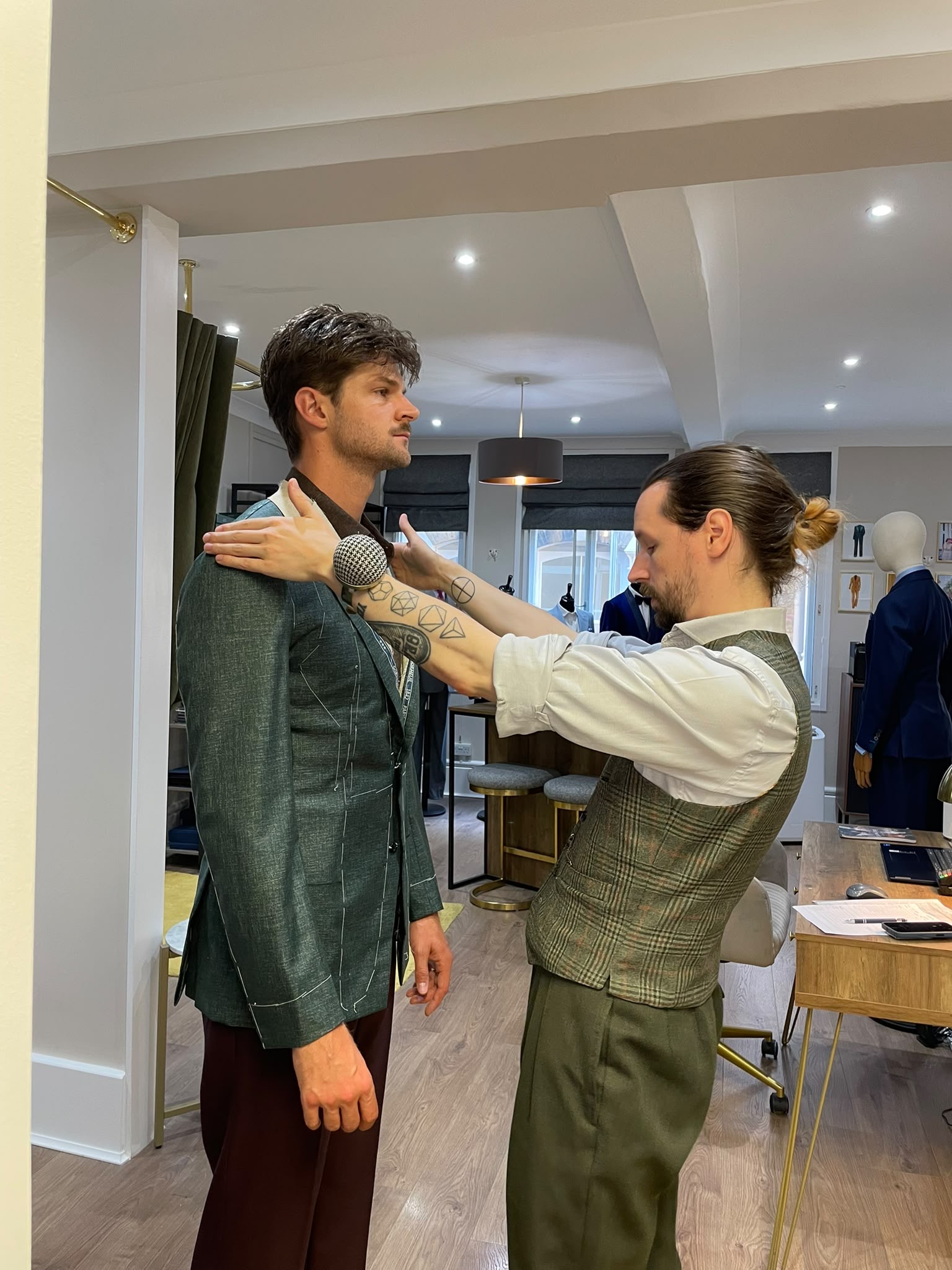
The fitting stage is vital. It gives the tailor the chance to see how the suit sits when the client is standing, sitting, and moving, how the cloth behaves, and which areas need attention. Just as importantly, the client can give immediate feedback on how it feels to wear.
A sleeve may feel slightly restrictive, or a jacket may sit differently when the client sits down, and the tailor can respond to that feedback there and then. Seeing how cloth behaves on a moving person reveals details that measurements alone can't capture, and the ability to make changes during this process is one of the reasons experience matters so much.
The Skill Behind the Craft
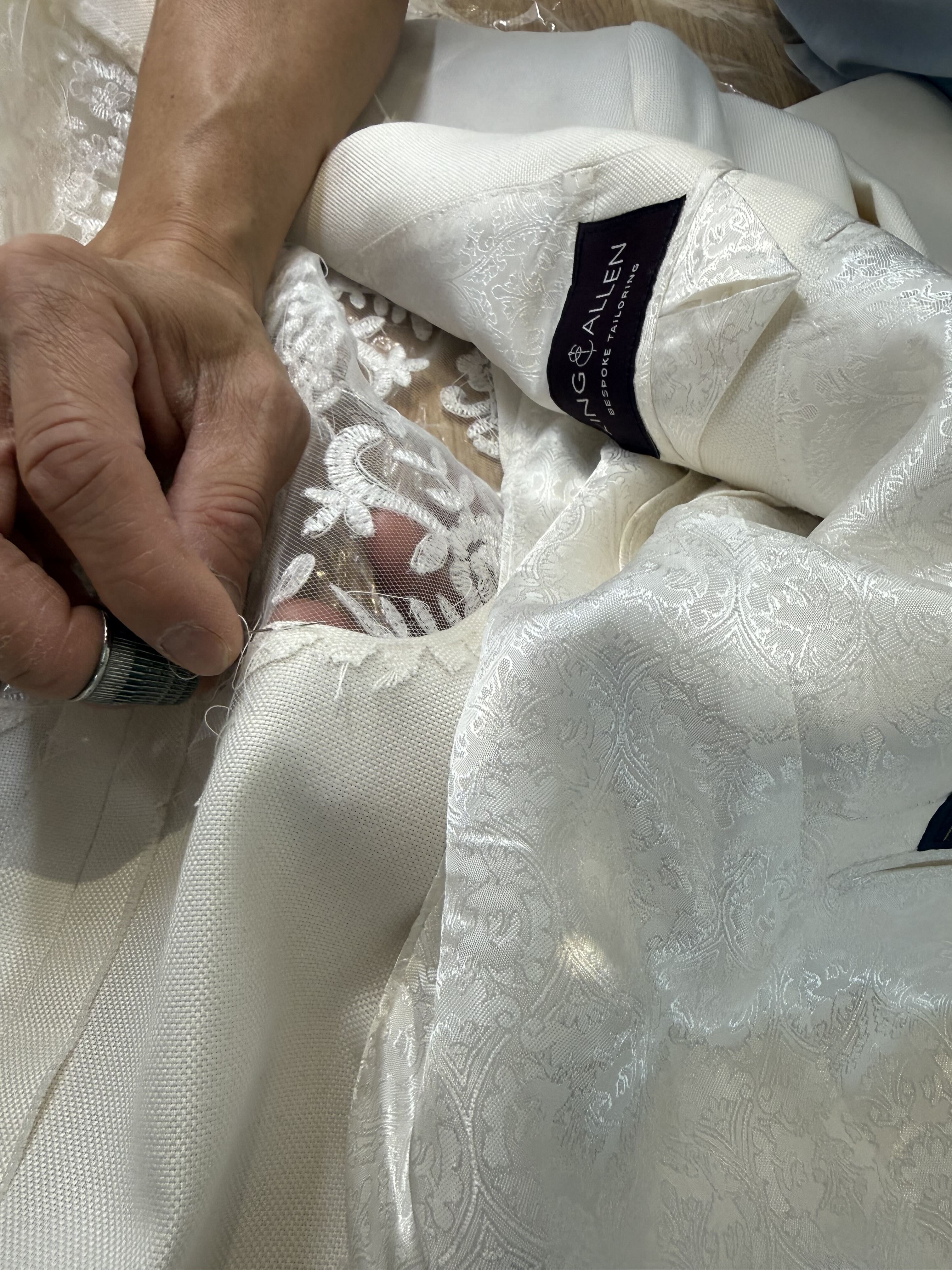
Behind every bespoke suit are skills that take years to master. A tailor learns to feel how much tension a thread needs, how far a cloth will stretch and ease, and how a lapel should be shaped so it rolls naturally rather than lying flat. Pressing with steam and heat can mould a flat piece of wool into the curve of a shoulder, and knowing exactly when to stop is a judgement no manual can fully teach.
Much of this knowledge lives in the hands rather than on paper. Two cloths with the same weight and composition can behave completely differently under the needle, and an experienced tailor adjusts instinctively as they work. It's the result of thousands of hours spent cutting, stitching and correcting, learning something new from every garment along the way.
AI can learn from data, but a tailor learns by doing. That difference is what turns a set of measurements into a suit that feels like it was made for you, because it was.
Creating What AI Hasn't Learnt Yet
AI learns from what already exists. Its suggestions are shaped by patterns in huge volumes of existing information, much of it published online, which means it reflects how tailoring has been done in the past and who it has traditionally been made for. For a long time, that has meant a fairly narrow idea of what a suit should look like and who should wear one.
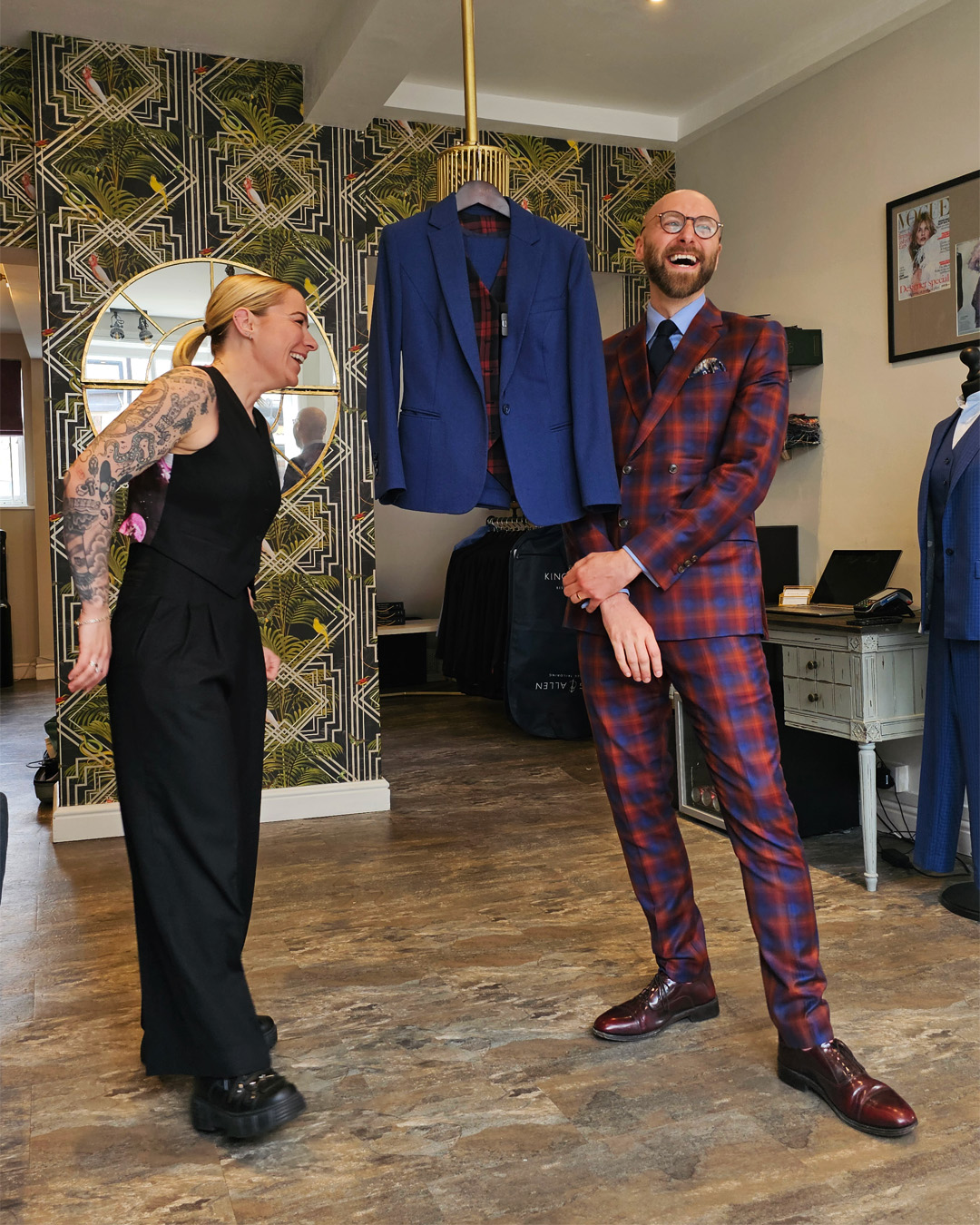
At King & Allen, much of our work sits at the leading edge of inclusive tailoring, and many of the techniques we use haven't been widely documented because we're developing them ourselves. Every day, our consultants and tailors are finding new ways to cut, shape and fit garments for people whose bodies, identities and needs the traditional rulebook never considered. Each solution comes from listening to a client, trying something new and refining it until it's right.
Where there's little existing knowledge to draw on, AI tends to fall back on the conventional answer. But when the right answer hasn't been written down yet, it takes people to find it. The next chapter of tailoring is being written in the fitting room, not learnt from a dataset.
Where AI Could Help Tailors
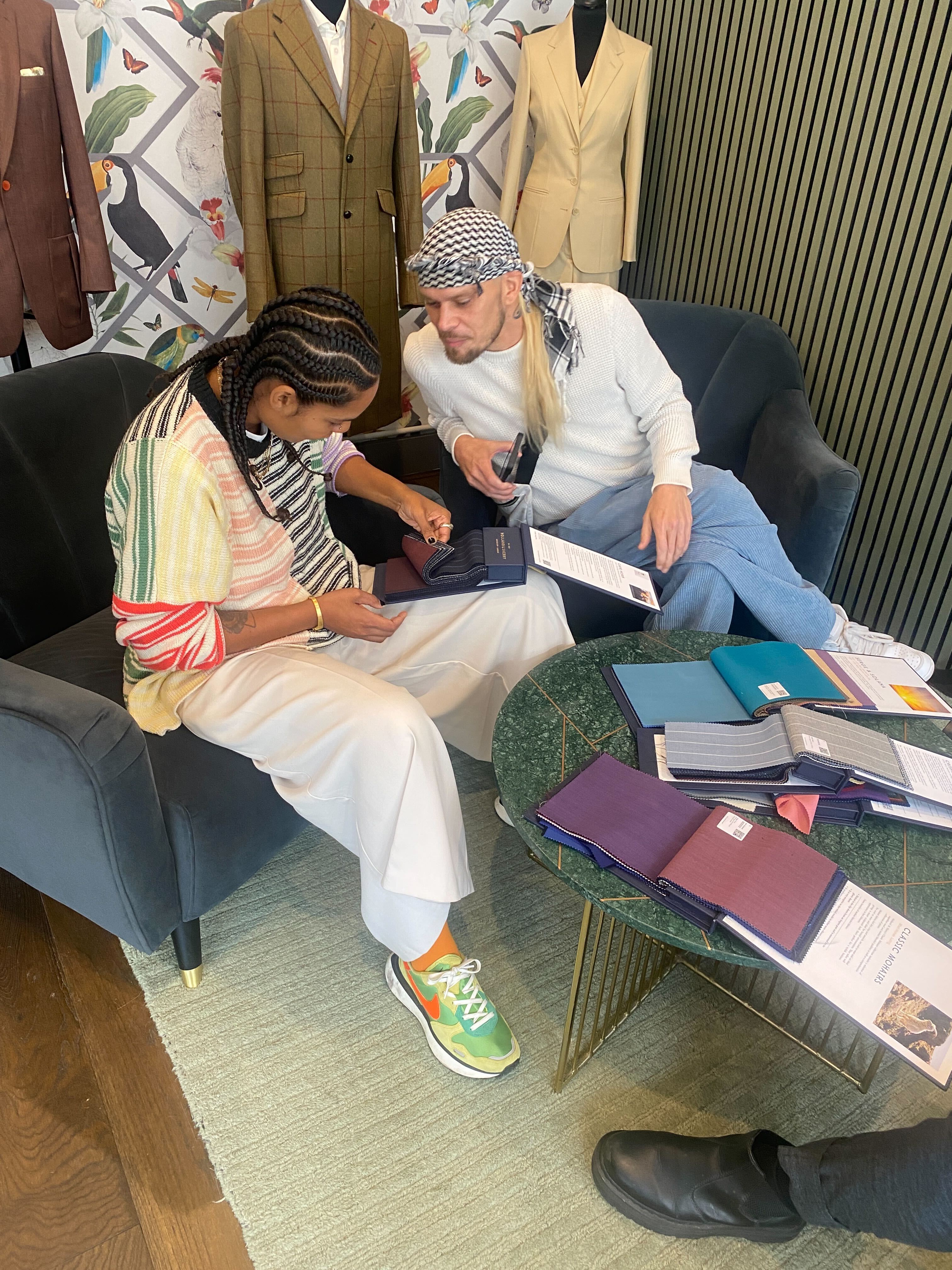
AI does have plenty of potential within the industry, and some of its most useful applications may happen behind the scenes to help tailors and consultants.
For example:
1. Design visualisation could allow tailors to explore and see ideas quickly. Creating a visual representation of a particular combination could inform a decision before the garment is made.
2. Research can help gather and summarise information, reducing the time professionals need to spend searching through large amounts of material. For example, researching different fabrics, historical styles or current trends.
3. Administration tasks that involve organisation, drafting basic communications or managing repetitive processes could potentially be completed more efficiently with the help of AI.
This could give tailors more time to concentrate on their specialist skills and their clients. AI can therefore have a practical role within the industry, as it can for many others, without becoming responsible for the creative and personal decisions at the centre of bespoke tailoring.
The Future of Bespoke Tailoring
AI is likely to become increasingly visible across the fashion and tailoring industry, and its capabilities will continue to develop. This will create a relationship between new technology and established craftsmanship rather than treating them as competing approaches. AI can become another tool in the tailor's workshop, helping professionals work more efficiently while leaving the skilled aspects in human hands.
Ready to experience bespoke tailoring for yourself?
Talk to one of our expert consultants today